
Post
How to Choose Industrial Rubber Sheets: 13 Rubber Materials Compared
Compare NR, SBR, NBR, EPDM, CR, silicone and FKM rubber sheets by properties, temperature range and application. A practical material selection guide.
Choosing an industrial rubber sheet comes down to four questions: what medium will it contact, what temperature will it face in continuous service, what mechanical load will it carry, and will it be installed indoors or outdoors? Once those four points are clear, the list of 13 common rubber materials usually narrows to two or three. The quick-reference table below helps narrow the options first, followed by a detailed comparison, notes on the most common materials, purchasing specifications and frequently asked questions.
Updated 19 November 2026 · Haifeng Rubber Technical Department
Quick reference: which rubber suits which service condition?
Industrial rubber sheet selection normally starts with the service conditions and works backward. Table 1 lists the preferred materials, possible alternatives and materials generally best avoided for nine common conditions. Start with the medium: a material mismatch here is the hardest problem to correct through formulation.
| Service condition or requirement | Preferred choice | Possible alternative | Generally avoid |
|---|---|---|---|
| Mineral oil, hydraulic oil or gear oil | NBR rubber sheet | HNBR or ACM for hot oil | NR, SBR, EPDM and silicone |
| Long-term outdoor service and ozone exposure | EPDM rubber sheet | CR or CSM | NR and NBR |
| Continuous service above 150 °C | Silicone rubber sheet or FKM rubber sheet | ACM or HNBR at about 150 °C | NR, SBR and BR |
| Low temperatures below -40 °C | Silicone rubber or BR | EPDM | FKM and ACM |
| Heavy wear and frequent friction | Polyurethane sheet | BR or SBR | Silicone and butyl rubber |
| Electrical insulation | Insulating compound based on NR or SBR | EPDM or silicone | CR and NBR |
| Flame resistance and self-extinguishing performance | CR rubber sheet | CSM or CM | NR, SBR and EPDM |
| Acids, alkalis and chemical media | EPDM or FKM | CR or CM | NR and NBR |
| Air tightness and vibration damping | Butyl rubber | NBR or CR | EPDM when high gas tightness is required |
“Generally avoid” means that the failure rate is noticeably higher under that condition, not that the material can never be used. For combined service conditions, select according to the dominant factor.
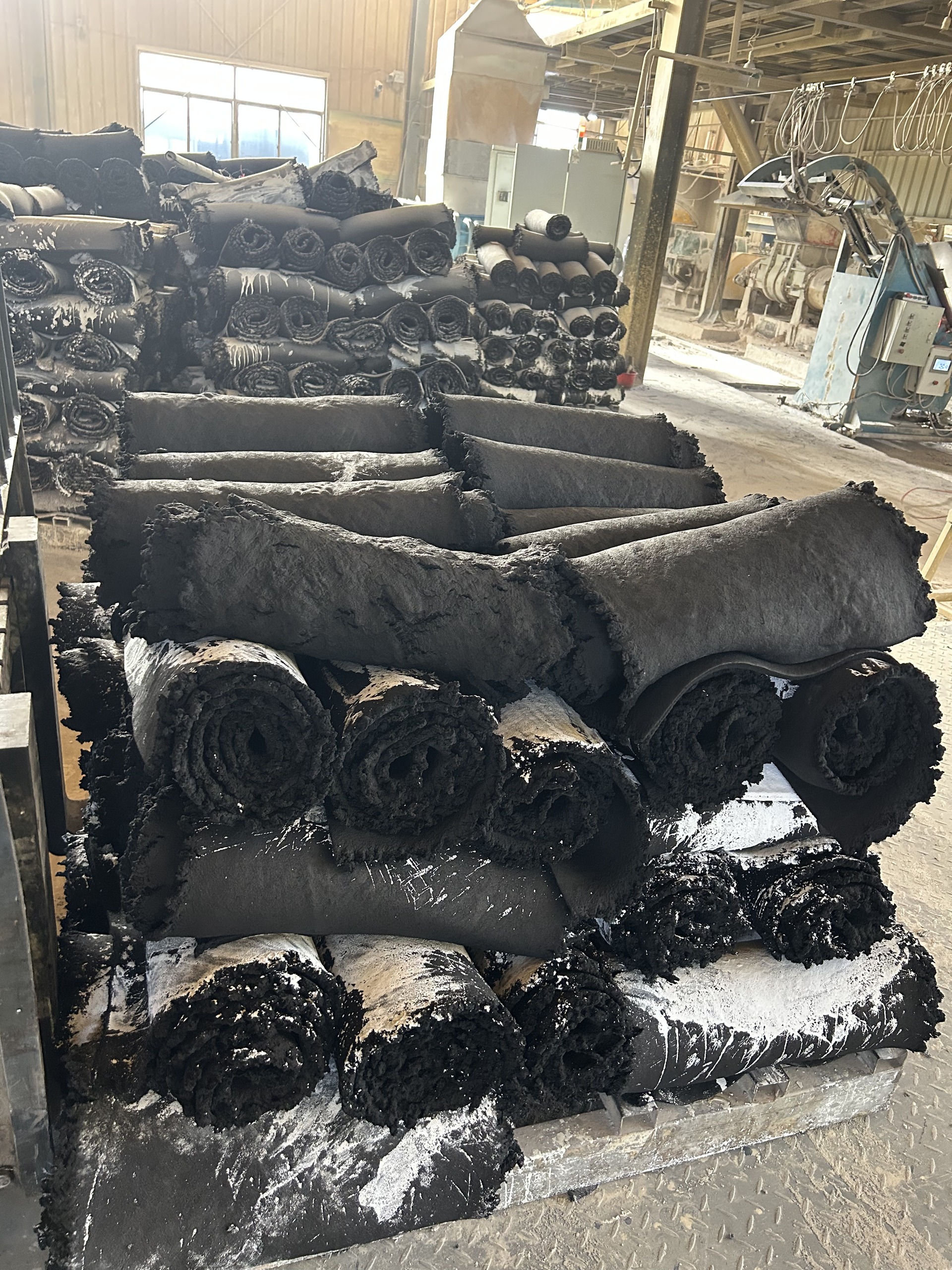
Comparison of 13 rubber materials
Table 2 summarises the relative strengths, limitations, typical continuous-service temperatures and common sheet applications of 13 rubber materials. The temperatures and properties are typical ranges. They change with polymer grade, filler system and curing system, so the final specification should be based on test results or an agreed technical specification.
| Rubber type | Relative strengths | Relative limitations | Continuous temperature | Common sheet applications |
|---|---|---|---|---|
| Natural rubber (NR) | Good elasticity and rebound; good tear and flex resistance; good processing and bonding; balanced mechanical properties | Limited resistance to ozone, oil and heat; ages faster in long-term outdoor service | -60 to +80 °C | General industrial sheet, vibration pads, fabric-reinforced sheet and roller covering |
| Styrene-butadiene rubber (SBR) | Better abrasion and heat resistance than NR; uniform texture and relatively low cost | Lower elasticity and tear resistance; poor self-adhesion | -50 to +100 °C | General industrial sheet, patterned sheet and gaskets |
| Butadiene rubber (BR) | Good elasticity and abrasion resistance; good low-temperature performance; low heat build-up under dynamic loading | Lower strength and tear resistance; average processing performance | -60 to +100 °C | High-elasticity pads and cold-resistant sheet, often blended with NR or SBR |
| Butyl rubber (IIR) | Very good air tightness; good ozone and ageing resistance; good damping and electrical insulation | Lower resilience; slow curing; poor oil resistance | -40 to +120 °C | Air-tight gaskets, corrosion-resistant linings and vibration pads |
| EPDM | Strong ozone, weather and ageing resistance among general-purpose rubbers; good electrical insulation; accepts high filler loading | Not suitable for aliphatic or aromatic hydrocarbons; difficult to bond | -50 to +150 °C | Outdoor pads, waterproof membranes and cable-sheathing sheet |
| Nitrile rubber (NBR) | Good resistance to mineral oil, petrol and aliphatic hydrocarbons; good abrasion resistance and air tightness | Limited cold and ozone resistance; poor electrical insulation | -30 to +100 °C | Oil-resistant sheet, oil-seal gaskets and tank linings |
| Chloroprene rubber (CR) | Good weather and ozone resistance; flame resistance; resistance to some oils and solvents; good mechanical properties | Limited low-temperature performance; relatively high density; prone to scorch during processing | -45 to +100 °C | Flame-retardant sheet, oil-resistant sheet and corrosion-resistant linings |
| Hydrogenated nitrile rubber (HNBR) | Good strength and abrasion resistance; better heat resistance than NBR | Higher cost; low-temperature and ozone performance still depend on the grade | -30 to +150 °C | High-temperature oil-resistant gaskets and timing-belt layers |
| Acrylic rubber (ACM) | Combines heat and oil resistance; stable in lubricants containing sulphur, phosphorus or chlorine additives | Poor cold resistance; not suitable for water or steam | -25 to +150 °C | High-temperature oil-seal gaskets and heat-resistant hose |
| Silicone rubber (VMQ) | Wide high- and low-temperature range; good electrical insulation and ozone resistance; chemically inert | Lower mechanical strength; limited resistance to oil and solvents | -60 to +200 °C | High-temperature gaskets, food and medical-grade sheet, and heat-resistant insulation pads |
| Fluoroelastomer (FKM) | Strong resistance to oil, many chemicals, high temperatures and vacuum service | Difficult processing; high cost; limited low-temperature flexibility and elasticity | -20 to +200 °C | Gaskets for aggressive chemicals and high-temperature oil seals |
| Polyurethane (PU) | Excellent abrasion resistance; good strength, elasticity and oil resistance | Limited heat resistance; not suitable for water, alkalis or polar solvents | -30 to +80 °C | Wear liners, screens, scraper blades and seals |
| CSM or chlorinated polyethylene (CM) | Good weather, ozone, flame and chemical resistance; CM also has good processing flow | Lower tear resistance and higher compression set | -20 to +120 °C | Cable-sheathing sheet, oil-resistant sheet and corrosion-resistant linings |
The temperature ranges are references for continuous service. Short-term temperature resistance may be higher. Tensile properties and hardness can be tested using methods such as GB/T 528 and GB/T 531.1, while GB/T 5574 can be used as a reference for industrial rubber sheet products.
Common rubber materials and how they behave
The table gives a side-by-side comparison. For a real project, it also helps to understand how each material behaves. The following seven materials account for much of the industrial rubber sheet market. The important points are where they differ and when they should not be used.
1. Natural rubber (NR)
Natural rubber has a well-balanced combination of elasticity, tensile strength and tear resistance. It performs reliably under repeated deformation, impact and friction, and also has good dynamic-fatigue resistance. It is widely used for vibration pads, buffers and abrasion-resistant liners.
Its main weaknesses are oil and ozone resistance. Long-term exposure to mineral oil, fuel or high ozone levels can cause swelling and cracking, while extended outdoor service accelerates ageing. When oil is present, natural rubber is usually not the first choice.
2. Styrene-butadiene rubber (SBR)
SBR is a widely used general-purpose synthetic rubber. It combines abrasion resistance with a reasonable cost and is common in general industrial rubber sheet, floor-protection materials and equipment pads.
Its weaknesses are oil and weather resistance. It swells in contact with oil and ages in prolonged outdoor exposure. SBR offers good value under mild conditions, but it should not be used on its own where oil or long-term sunlight is involved.
3. Nitrile rubber (NBR)
For continuous contact with lubricating oil, mineral oil or certain fuels, oil resistance comes first. NBR rubber sheet, gaskets and oil seals are widely used in these conditions. NBR also provides useful abrasion resistance and mechanical strength.
Oil resistance still varies with acrylonitrile content, formulation and the actual oil. The word “nitrile” alone is not enough to confirm suitability. Its ozone and outdoor ageing resistance are also weaker than EPDM, so outdoor installation needs care.
4. EPDM
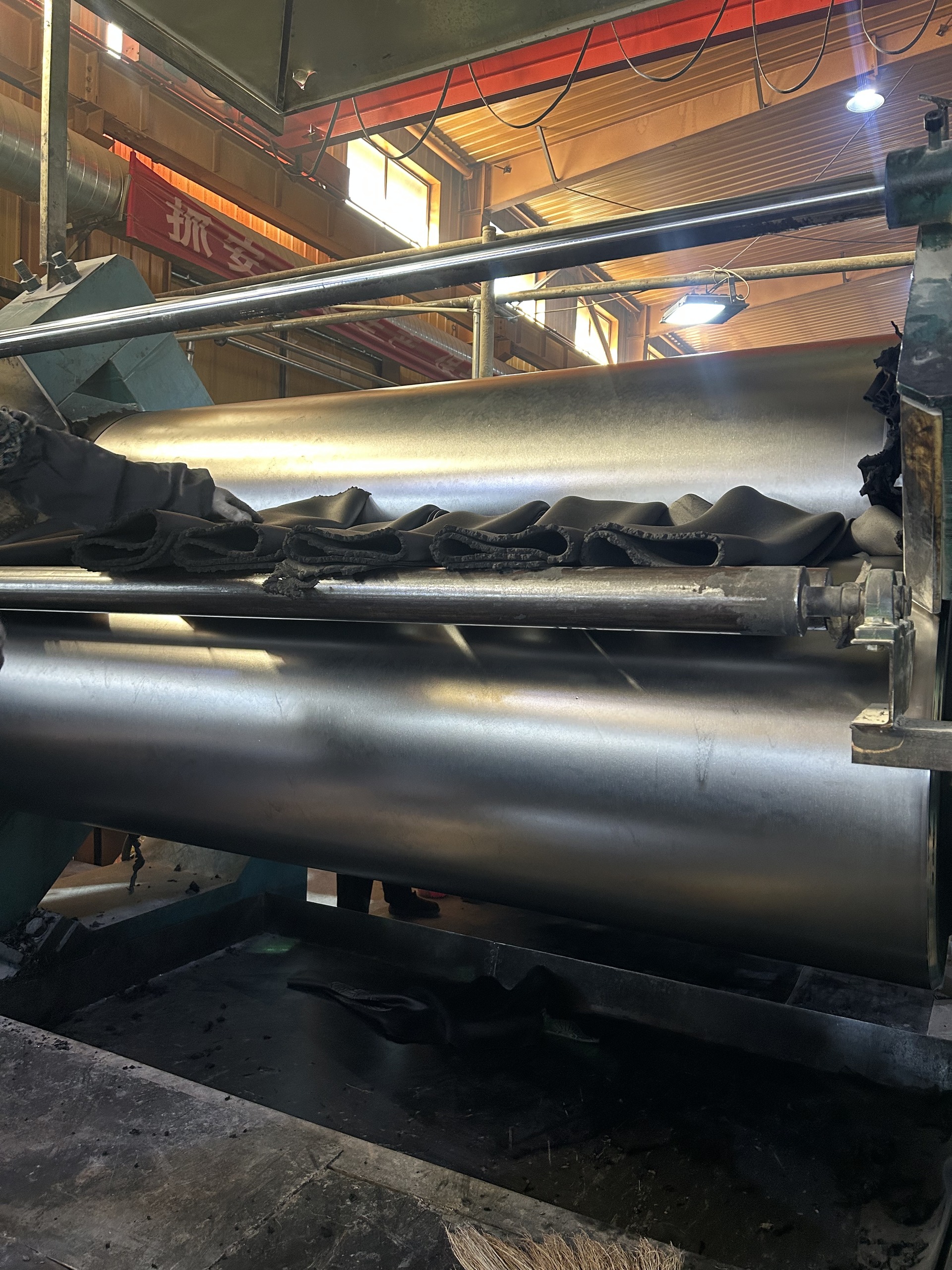
EPDM stands out for weather, ozone and water resistance. It remains relatively stable during long-term exposure to sunlight, air and rain, which makes it common in outdoor seals, waterproof gaskets and pipe seals. Some formulations also handle hot water and steam.
EPDM is not suitable for long-term contact with mineral oil or most petroleum-based fuels and can swell considerably in oil. Asking “is there any oil?” at the start of selection prevents a great deal of rework.
5. Chloroprene rubber (CR)
Chloroprene rubber offers a balanced set of properties: weather and ozone resistance, some oil resistance and, in certain formulations, flame resistance. It works well outdoors and in mechanical-protection parts.
It is not suitable for every oil or chemical. Strong solvents, aromatic hydrocarbons and hot oil still need to be assessed according to the exact medium and operating temperature.
6. Silicone rubber (VMQ)
Silicone rubber has a wide service-temperature range and remains flexible at both high and low temperatures. It also has good weather, ozone and electrical-insulation properties.
Its mechanical strength and tear resistance are relatively low, so it may not suit heavy wear. Its oil resistance is also limited. High- and low-temperature seals and electrical insulation are its main applications.
7. Fluoroelastomer (FKM)
FKM is a speciality rubber with strong heat, oil and chemical resistance. It is often used for chemical-equipment seals and high-temperature oil seals.
The high cost cannot be ignored, and low-temperature behaviour and chemical compatibility vary between formulations. State the medium, concentration and temperature before choosing the grade; that is more useful than comparing price first.
These are typical properties of common formulations, not test results for a particular grade or production batch. Actual values must be confirmed against the product specification and test report.
Five factors that decide the material
1. Medium: distinguish oil resistance from chemical resistance
A basic rule of oil resistance is that materials with similar polarity tend to dissolve or swell one another. Petrol, diesel, hydraulic oil and mineral oil are non-polar media and can swell NR, SBR, EPDM and silicone rubber. The more polar NBR and CR are relatively stable. A broad ranking of oil resistance is FKM, ACM and HNBR, NBR, CR, followed by EPDM and NR.
NBR has another adjustable factor: increasing acrylonitrile content improves oil resistance but reduces cold flexibility. When specifying oil-resistant rubber sheet, state not only the oil type but also whether contact is continuous or occasional and the oil temperature. Both points influence acrylonitrile content and formulation.
2. Temperature: check both upper and lower limits
Typical upper limits for continuous service are about 200–250 °C for FKM; 200 °C for silicone; 150 °C for ACM, HNBR, EPDM and butyl rubber; 100–120 °C for CR and NBR; and 80–100 °C for NR, SBR and BR. Silicone and BR have the broadest low-temperature ranges and may remain usable at -60 °C or below. FKM and ACM have noticeably weaker cold performance.
Data sheets often show short-term rather than continuous temperature limits. Silicone may tolerate 300 °C briefly, but continuous service is normally designed around 200 °C. Treating a short-term value as a continuous rating is a common cause of early hardening and cracking in rubber gaskets.
3. Environment: ozone, ultraviolet light and outdoor ageing
Rubber ageing is driven mainly by ozone, ultraviolet light and heat with oxygen. The more double bonds in the molecular backbone, the more vulnerable the material is to ozone. NR and NBR can therefore crack outdoors. EPDM performs well among general-purpose rubbers and is normally considered first for long-term outdoor parts. Butyl rubber, CR, CSM and CM also have useful weather resistance.
When outdoor service also involves oil, the options narrow considerably. CR, CSM and FKM are usually the main materials to assess.
4. Mechanical load: abrasion, tearing and compression
Abrasion, tearing and compression set are different properties. Polyurethane has particularly strong abrasion resistance and suits high-friction, high-wear service. BR has low dynamic heat build-up and good flex resistance for repeatedly bent parts. NR offers balanced mechanical properties, with good tear resistance and rebound.
For parts under continuous compression, such as gaskets and machine-foot pads, compression set also matters. This property depends heavily on the formulation and curing system, not only on the polymer name.
5. Electrical performance: special requirements for insulating sheet
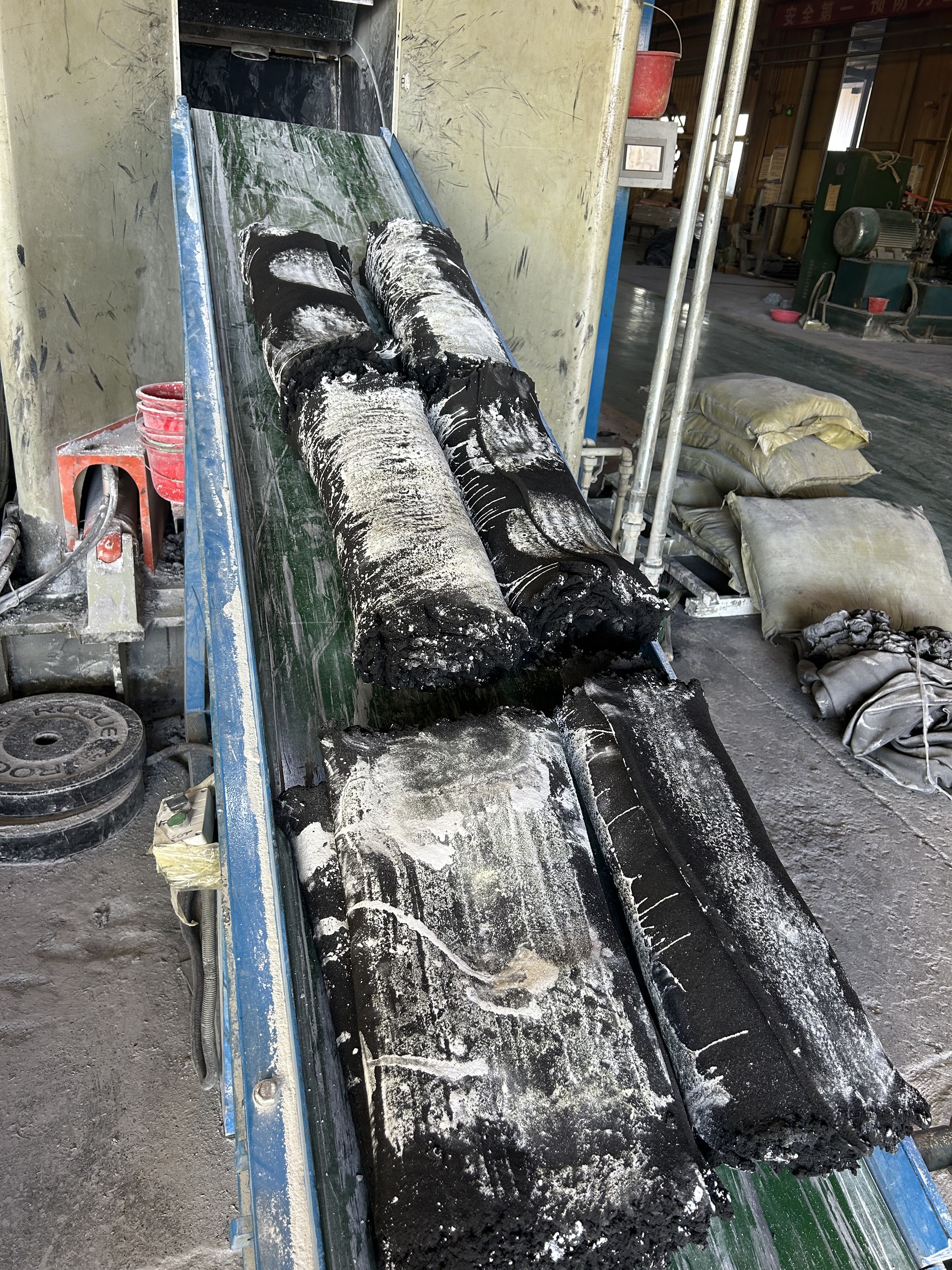
The main polymers in insulating rubber sheet are normally NR or SBR, combined with low-conductivity fillers and adequate curing. EPDM or silicone may be used where weather or heat resistance is also required. Because CR and NBR are relatively polar, they are generally not used for electrical insulation.
Insulation performance cannot be judged from the rubber type alone. Volume resistivity, breakdown voltage and other values must be tested for the required voltage class. Ask for a test report covering the production batch.
Five common material-selection mistakes
- Ranking materials by price. FKM can cost many times more than NBR, yet at -30 °C it may perform worse than NBR or even BR. The higher price buys oil and temperature resistance, not better performance in every respect.
- Using one rubber everywhere. A gasket immersed in oil and a pad exposed outdoors on the same machine should not automatically use the same material.
- Looking at the polymer but not the formulation. Sulphur-cured and peroxide-cured NBR can differ substantially in heat resistance and compression set. Raising acrylonitrile content from 18 to 40 improves oil resistance and reduces cold flexibility. The polymer sets the broad limit; the formulation determines how close the product comes to it.
- Blaming the material for a design problem. Excessive compression, an incorrect groove size or poor heat dissipation cannot be fixed simply by changing the rubber.
- Treating laboratory data as service data. Tensile strength and elongation under standard laboratory conditions are not the same as retained properties after 1,000 hours in hot oil. Validation is needed between the two.
Four details to confirm when purchasing
- Hardness. This is normally specified in Shore A. Different hardness levels in the same rubber produce different compression and sealing behaviour, so hardness must be written into the order.
- Service conditions. State the medium and concentration, working temperature, whether immersion is continuous, ozone or UV exposure, and any flame-retardant or anti-static requirement.
- Mechanical properties. Specify tensile strength, elongation at break, tear strength, any fabric reinforcement and any low-compression-set requirement.
- Test basis. Agree on the product and test-method standards used for acceptance. Where necessary, also agree on property retention after ageing.
Putting these four points into the technical agreement is far more effective than writing only “oil-resistant rubber sheet” on the order. That description can refer to different polymers, acrylonitrile contents and curing systems at different suppliers.
Frequently asked questions
How do I choose the material for a rubber sheet?
Eliminate materials in order according to the medium, temperature, mechanical load and environment. The 13 common rubber types will usually narrow to two or three. Then use hardness, thickness, sheet or roll dimensions and cost to make the final choice.
Which rubber is normally used for oil-resistant sheet?
NBR is the usual choice. When oil temperature exceeds 120 °C, or when the sheet contacts lubricants containing sulphur, phosphorus or chlorine additives, consider HNBR or ACM. For combined high temperature, strong solvents and aggressive chemicals, assess FKM.
Which rubber sheet is suitable for outdoor use?
EPDM is normally the first choice. If oil resistance is also required, assess CR or CSM. For combined low-temperature and outdoor service, silicone may be suitable.
What material is insulating rubber sheet made from?
NR or SBR is commonly used as the main polymer in an insulating compound. EPDM or silicone may be selected when higher weather or heat resistance is required. The insulation class must be confirmed by the finished-product test report, not by the material name alone.
What temperature can rubber sheet withstand?
Typical continuous-service ranges depend on the rubber: NR, SBR and BR are about 80–100 °C; CR and NBR about 100–120 °C; EPDM and butyl rubber about 150 °C; silicone and FKM above 200 °C. Short-term limits may be higher.
Which rubber sheet can be used for food contact?
Silicone and EPDM are common, but the product must have a test report that meets the relevant food-contact requirements. The rubber name alone does not establish food-contact suitability.
Is surface bloom or odour normal on rubber sheet?
Light bloom is often caused by compounding ingredients migrating to the surface and normally does not affect use. Odour depends on the base rubber, curing system and post-treatment. If it is accompanied by hardening, stickiness or dimensional change, check the material again against the medium and temperature.
How can I judge rubber sheet quality?
Start with three checks: whether Shore A hardness matches the order, whether tensile strength and elongation at break meet the agreed values, and whether property retention after ageing passes. Then check whether the report covers the relevant service property: volume change for oil resistance, breakdown voltage and volume resistivity for insulation, or a fire rating for flame resistance. When possible, expose a sample to the actual medium and temperature before placing the full order.
What information is needed for custom rubber sheet?
Provide the material or service conditions, hardness, thickness, roll or sheet dimensions, quantity, drawing or sample, and any fabric reinforcement, patterned surface or sponge structure. If the material is not yet known, the medium and temperature are enough to start the selection.
About Haifeng Rubber Products Co., Ltd.
Haifeng Rubber Products Co., Ltd. was established in 2008. Its production base is in the Migezhuang Development Zone, Hejian, Cangzhou, Hebei, China. The company manufactures industrial rubber sheet and rubber sheet rolls, together with engineering plastic sheets and rods, electrical-insulation sheets and rods, packing and sealing materials. Its products are supplied to more than 150 countries and regions.
The company operates a 1,500-square-metre technical centre, more than 40 curing machines and eight standard warehouses. Custom production is available for thickness, hardness, roll or sheet dimensions and composite structures. Rubber sheet products are available at haifengrubber.com, while the broader product range is available at hfplasticandrubber.com.
If the material is not clear, provide the medium, temperature, type of load and service environment. The technical team can use those four points to suggest a material and sample plan.
There is rarely one standard answer to material selection. The suitable answer depends on the constraints. A clear description of the service conditions does more to reduce later failure costs than repeated price comparisons.
Related products: NBR rubber sheet, EPDM rubber sheet, CR rubber sheet, silicone rubber sheet, natural rubber sheet, SBR rubber sheet, polyurethane sheet, fabric-reinforced rubber sheet, anti-static rubber sheet and insulating rubber sheet.