Skip to content
Request A Quote RFQ
Factory Industrial Rubber Sheet Manufacturing Process

The complete process

Industrial Rubber Sheet Manufacturing Process

See Haifeng Rubber’s eight-stage industrial rubber sheet manufacturing process, from compound formulation to mixing, calendering, vulcanization, inspection and packing.

From specification to shipment

From rubber compound to finished sheet

Haifeng Rubber manufactures industrial rubber sheets and rolls through eight connected stages. Work starts with the application and agreed material specification, then moves through compound preparation, mixing, sheet forming, optional fabric reinforcement, vulcanization, quality inspection, and cutting and packaging.

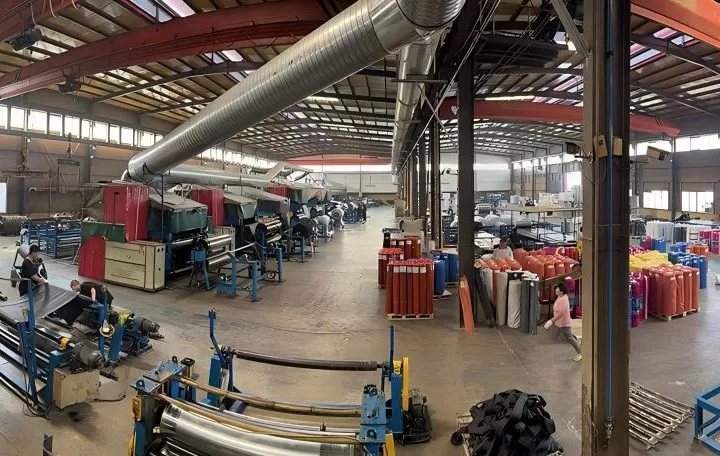
Our factory has a daily production capacity of 335 metric tons and 125 sets of manufacturing and testing equipment. The equipment includes six internal mixers, ten two-roll open mills, eight calendering machines, 68 drum vulcanizing machines, 15 testing equipment sets, and 18 cutting and slitting machines. The route and checks depend on the rubber material and the order specification.

Materials and order formats

We manufacture sheets from SBR, natural rubber, NBR, EPDM and other specified elastomers. Buyers can discuss rolls, cut sheets, surface patterns, fabric reinforcement, thickness, width and packing requirements. Fabric reinforcement is an optional step, used only when the requested sheet construction calls for it.

What should you send for a quotation?

Share the intended application, material, target properties, thickness, width, roll or cut-sheet size, quantity, and any test or packing requirements. Our team can then review the production route and prepare a focused quotation. You can also browse the rubber sheet catalog or view available test reports.

Discuss your requirements

Eight production stages

What happens at each stage

Here is how an industrial rubber sheet moves from material preparation through forming, curing, inspection and packaging.

01 / 08

Rubber Compound Formulation

The process begins with the intended application and the properties the buyer needs. The team selects a suitable base elastomer, such as SBR, natural rubber, NBR or EPDM, and considers hardness, density, tensile properties, abrasion resistance and the service environment. Fillers, oils and other ingredients are chosen for the agreed compound specification.

Raw materials are weighed before mixing. If an order calls for a custom sheet, the target properties and dimensions are discussed at this stage so the compound can be evaluated and adjusted before production.

02 / 08

Internal Rubber Mixing

The weighed ingredients enter enclosed internal mixers. Haifeng Rubber operates six of these machines to combine rubber polymers with fillers, processing oils and selected additives. Mechanical mixing disperses the ingredients and prepares the compound for the following sheet-forming operations.

Mixing time, temperature, rotor speed and discharge conditions follow the formulation. The discharged compound is then sheeted and cooled before it moves to the open mills. These controls help keep the material consistent from one production batch to the next.

03 / 08

Open Mill Mixing & Sheeting

The compound is worked between the rollers of two-roll open mixing mills. Ten mills support repeated passes that improve uniformity and turn the mixed material into preliminary sheets. Depending on the formulation, curing ingredients may be incorporated during this stage.

Roller gap, temperature and the mixing sequence are controlled to disperse ingredients evenly while limiting premature curing. The preliminary sheets are cooled and given the required resting period before they are sent for calendering.

04 / 08

Rubber Calendering

Prepared compound passes through calender rollers to form continuous rubber sheets. The factory's eight calendering machines are adjusted for the thickness, width and surface specified for the product. The result may be a smooth sheet or material prepared for another surface or construction requirement.

Roller gaps, temperatures, feed and line speed are monitored during forming. Thickness uniformity and surface appearance are checked before the sheet proceeds to optional fabric reinforcement or directly to vulcanization, as the order requires.

05 / 08

Fabric Reinforcement & Preforming (Optional)

Fabric reinforcement is used only when the agreed rubber sheet construction calls for it. Suitable textile material can be positioned between rubber layers to produce a fabric-inserted sheet with one or more reinforcement layers. Standard sheets without fabric insertion bypass this stage.

Before vulcanization, the team checks the alignment of the fabric, the position of the reinforcement, the thickness of the surrounding rubber layers and the surface condition. Buyers should include the intended use and any fabric-layer requirements in their RFQ.

06 / 08

Rubber Vulcanization

The formed sheet is cured to develop the intended rubber properties. Haifeng Rubber operates 68 drum vulcanizing machines for continuous sheet production. The curing route and settings depend on the compound, thickness and sheet construction specified for the order.

Temperature, contact pressure and line speed are monitored so the sheet cures evenly. Vulcanization creates crosslinks in the rubber; after curing, the sheet is cooled and stabilized before final inspection and finishing.

07 / 08

Quality Inspection & Testing

Inspection checks the finished sheet against the agreed product specification. Fifteen sets of testing equipment support checks on physical properties, dimensions and surface condition. Depending on the order, these can include Shore A hardness, density, tensile strength, elongation, thickness and appearance.

Relevant samples are tested using the applicable method, and results are recorded for batch traceability. The team reviews any additional testing or documentation requested for the product before approved sheets move to cutting and packaging.

08 / 08

Cutting & Packaging

After inspection, the rubber sheet is trimmed and prepared in the ordered format. Eighteen cutting and slitting machines support rolls, cut lengths and flat sheets. Finished dimensions, roll length, surface condition and quantity are checked against the order.

The sheets are then wrapped, stacked or palletized as needed, with product and batch identification for handling and shipment. Buyers can specify labels, roll size, pallet configuration and loading requirements when requesting a quotation.

WhatsApp Email RFQ Top
WhatsApp RFQ