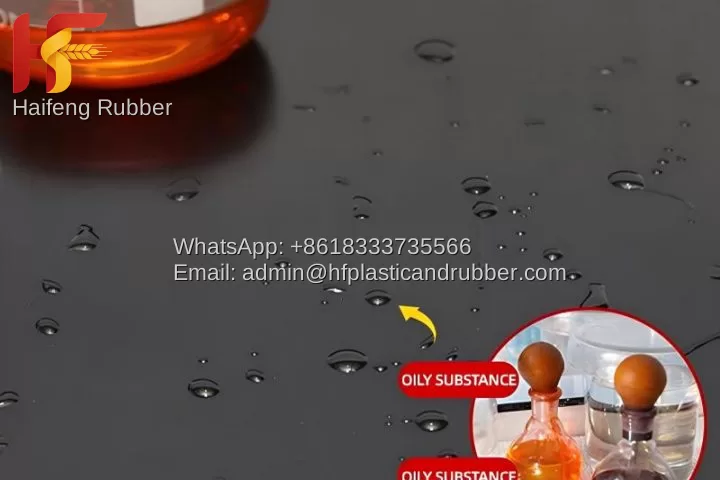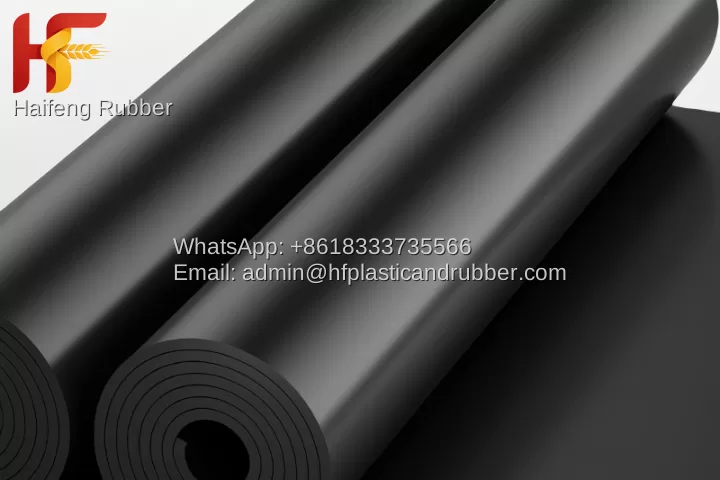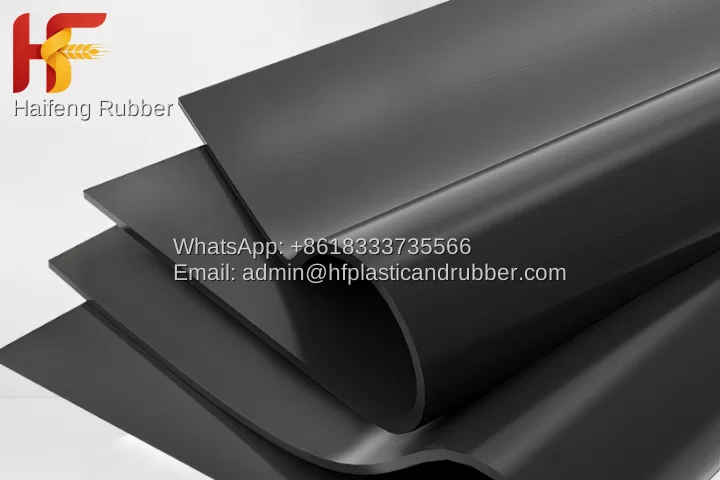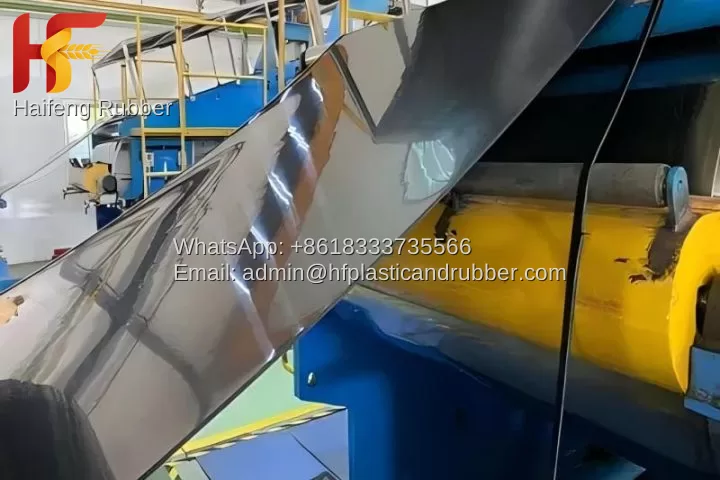
Product Overview
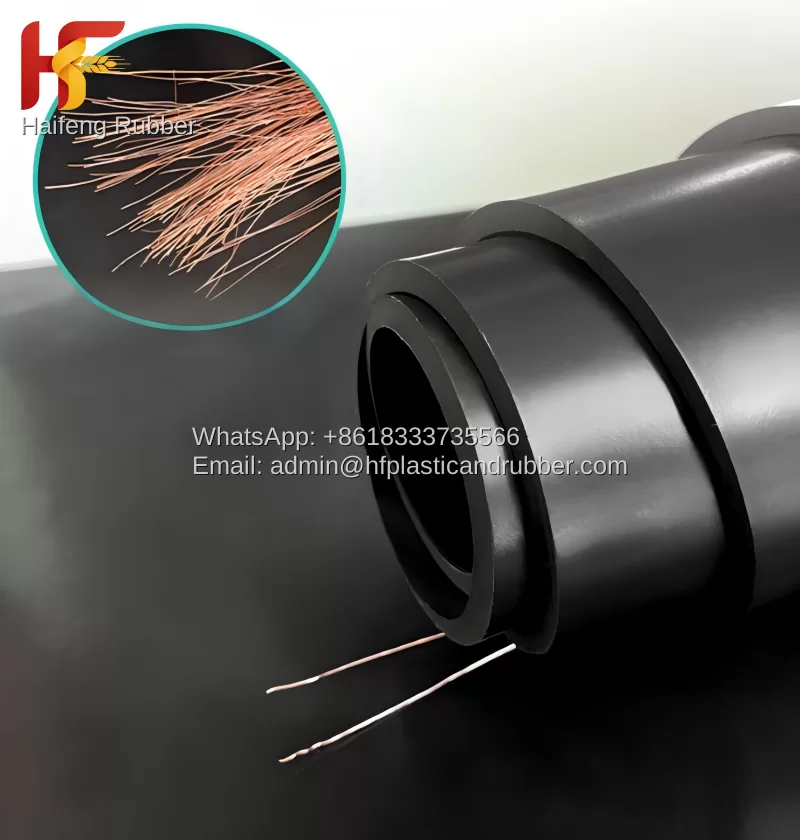
Static conductive rubber sheet is a low-resistance elastomer material designed to provide a controlled path for electrostatic charge to reach ground. Conductive fillers are blended through the rubber compound, so the electrical property is not dependent on a temporary surface coating.
Compared with anti-static or static-dissipative rubber, a conductive grade normally has lower resistance and transfers charge more quickly. It can be used as a homogeneous conductive floor covering, an equipment grounding pad or the conductive lower layer of a designed ESD work-surface system.
The required resistance must be selected as part of the complete ESD control plan. Test voltage, electrodes, conditioning, grounding hardware and installation method can change the measured result. Haifeng Rubber therefore confirms electrical values against an agreed test method and acceptance range rather than relying on the product name alone.
This material is not an electrical insulating mat and must not be used for protection against electric shock. Conductive rubber intended for ESD flooring or work areas must be connected to a correctly designed grounding arrangement.
Haifeng Rubber supplies conductive rubber in rolls, cut sheets, strips, equipment pads and drawing-based parts. For quotation, provide the target resistance range, test method, thickness, dimensions, quantity, working environment and grounding design.
Key Features
- Controlled low electrical resistance for static-charge conduction
- Conductive property distributed through the rubber compound
- Single-layer homogeneous construction available
- Rolls, sheets, strips and custom-cut equipment pads
- Target resistance and test method confirmed before production
- Compatible grounding accessories and installation details reviewed with the project
Applications
- Grounded ESD flooring areas
- Conductive lower layers beneath static-dissipative work surfaces
- Electronics assembly and component-handling zones
- Equipment grounding pads and support strips
- Testing, repair and controlled laboratory work areas
- Custom conductive rubber components
- Industrial static-control installations after system review
Specifications
| Thickness | 1mm/2mm/3mm/5mm/6mm/8mm/10mm or custom by production review |
|---|---|
| Width | 1000mm and 1200mm standard; 1500mm or wider subject to production review |
| Length | 10m or 20m rolls; cut lengths available |
| Hardness | 65±5 Shore A |
| Color | Black standard |
| Density | 1.6g/cm³ |
| Surface | Smooth, matte or fabric-impression finish |
| Packaging | Export-wrapped rolls, cut sheets or pallet packing |
Customization Available
These options can be adjusted after the required application and order specification are confirmed.
- Target surface or volume resistance range
- Resistance test voltage, electrodes and conditioning method
- Rubber compound and Shore A hardness
- Thickness, width and roll length
- Smooth, matte or specified surface finish
- Full rolls, cut sheets, strips and drawing-based parts
- Grounding-point and installation requirements
- Batch test report, labeling and export packaging
Frequently Asked Questions
What is static conductive rubber sheet?
It is rubber containing conductive fillers that allow electrostatic charge to travel through the material toward a designed grounding point.
Is conductive rubber the same as anti-static rubber?
No. Conductive rubber normally has lower electrical resistance and transfers charge faster. Anti-static or static-dissipative materials are often selected where slower controlled discharge is required.
What resistance range is available?
A typical conductive product may be specified around 10³–10⁵ Ω, but the correct value depends on the compound, application and agreed test method.
Does conductive rubber sheet need to be grounded?
Yes. The material provides a charge path, but it must be connected to a correctly designed grounding system.
Can it be used as a workbench surface?
It can form part of some engineered ESD systems, although a static-dissipative top surface is often preferred for direct handling of sensitive components.
Can conductive rubber be used as an electrical insulating mat?
No. Conductive rubber is designed to carry charge and must not be used for electric-shock protection.
Is it suitable for ESD flooring?
Yes when the sheet, joints, grounding method, footwear system and resistance-to-ground requirement are designed and tested together.
Can it be used in hazardous areas?
Not automatically. Hazardous-area use requires site-specific engineering, grounding design and applicable approvals.
Can you provide resistance test reports?
Yes. State the required range, test method, voltage, electrodes and conditioning before production.